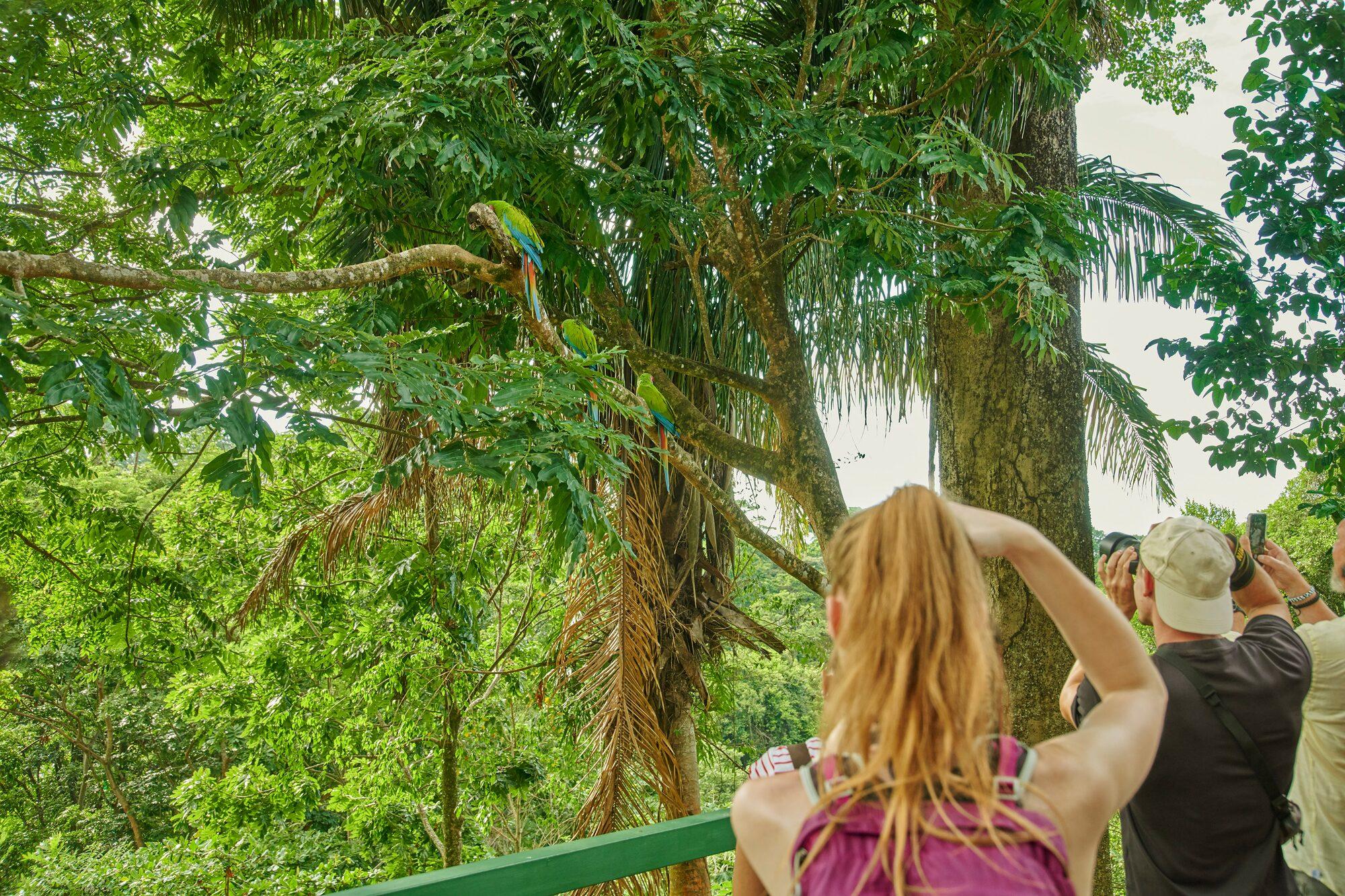
Green iguanas, great green macaws: frequent guests at Tree House Lodge
For 20 years, our property was home to the Iguanaverde Foundation, a Dutch-Costa Rican initiative dedicated to breeding green iguanas in natural-habitat conditions and re-establishing a wild reserve. It was founded in partnership with the Universidad Nacional de Costa Rica and Wageningen University & Research, and registered as a non-profit in the Netherlands. The foundation had to close its doors during the pandemic. Since all the animals had been released by then, we decided to bring the project to a close after two decades. Of course, you'll still see plenty of iguanas around the property. Many of them simply decided to stay.
Breeding back the green iguana
Hunted for generations for its meat and eggs and squeezed by habitat loss, the green iguana vanished from much of the Costa Rican lowland forest where it was once everywhere. Iguanaverde's answer was patient: raise iguanas in conditions as close to wild as possible, then release them. The heart of the program was a 2,000-square-meter enclosure that mimicked the surrounding jungle, with a sandy nesting area, food plants, mature trees for shelter and forage, and a fish pond for water. This kept the iguanas self-sufficient, which is exactly what their survival outside the fence depended on. For 20 years, juveniles were released into the wild every year, and today you'll still meet their descendants basking all over the estate's ten acres.
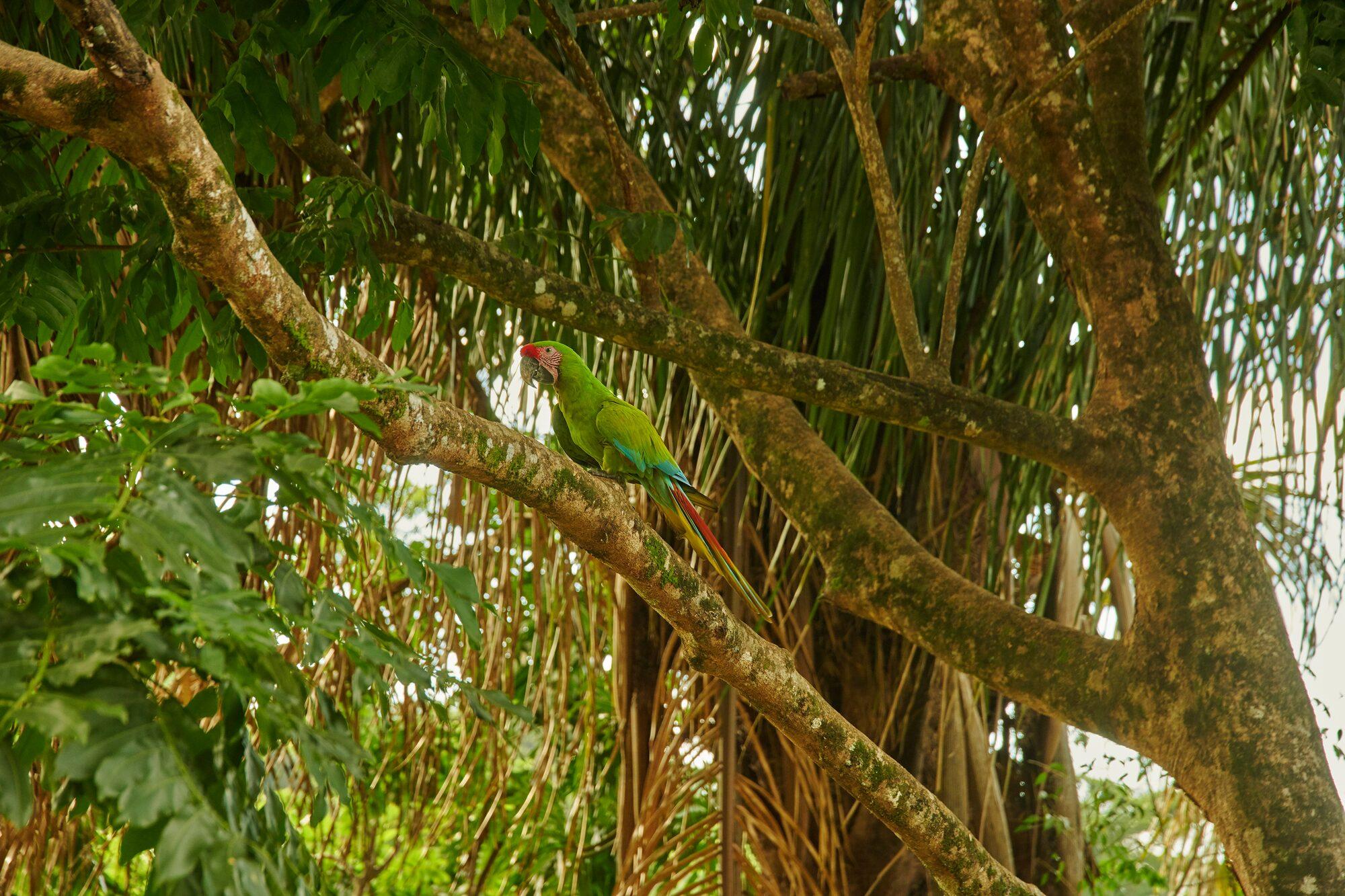
Great green macaws, on the brink of extinction
Some of Costa Rica's most spectacular birds are spotted on our property every day. The great green macaw, bright green with a red forehead and blue flight feathers, faces an uncertain future: according to the IUCN, fewer than 300 remain in the wild in Costa Rica and an estimated 1,500 worldwide. In nearby Manzanillo, the Ara Project runs a successful breeding programme and has reintroduced great green macaws into the wild.
Visit the Ara Project
Visits to the Ara Project in Manzanillo are generally daily at 3 pm, by reservation. Special visits can be arranged on request.
- Tours are offered on a daily basis.
- The rate is $20 per person; children under 12 go free.
- On the estate: no littering, no smoking, voices low, and never feed the iguanas.
- Space is very limited, so book your own visit at https://aramanzanillo.org/book-now/
Iguanas & Macaws FAQ
What is the Iguanaverde Foundation?
The Iguanaverde Foundation was a green-iguana conservation programme on the grounds of Tree House Lodge in Punta Uva, Costa Rica. For 20 years it bred iguanas in a 2,000-square-metre natural-habitat enclosure and released juveniles into the wild. It was founded with the Universidad Nacional de Costa Rica and Wageningen University & Research, and closed during the pandemic once all its animals had been released.
Is there still an iguana tour at Tree House Lodge?
No. The Iguanaverde Foundation closed during the pandemic, so there is no iguana tour any more. You will still see many green iguanas around the property, the descendants of twenty years of releases. To see endangered great green macaws, visit the Ara Project in nearby Manzanillo; reception can tell you how.
How do I visit the great green macaws at the Ara Project?
The Ara Project in Manzanillo offers visits by reservation, generally daily at 3 pm, at $20 per person; children under 12 go free. Space is very limited, so book ahead at aramanzanillo.org.
Will children see iguanas at the lodge?
Almost certainly. Green iguanas bask all over the estate's ten acres, often on the paths and in the trees near the houses. They are wild animals, so watch, don't feed or touch.
Why do green iguanas need protecting in Costa Rica?
Green iguanas have been hunted for generations for their meat and eggs and squeezed by habitat loss, so they vanished from much of the Costa Rican lowland forest where they were once common. For 20 years, Iguanaverde raised them in near-wild conditions so released iguanas could fend for themselves.